


 English
 русский
 Español
 عربى
عربى
Author: Admin Date: 2026-09-11
What Should Engineers Consider When a Motor Stops Hundreds of Times a Day?
In automated production and material-handling equipment, motor performance is no longer measured only by running efficiency. Repeated stopping, positioning, and restarting can place additional demands on the drive system, particularly when the machine operates continuously throughout a production shift. Conveyors, packaging machines, sorting equipment, lifting mechanisms, and automated handling systems may all require frequent braking as part of their normal operating cycle. Selecting the right Brake Motor therefore requires engineers to look beyond rated power and consider braking frequency, load inertia, thermal conditions, and control coordination.
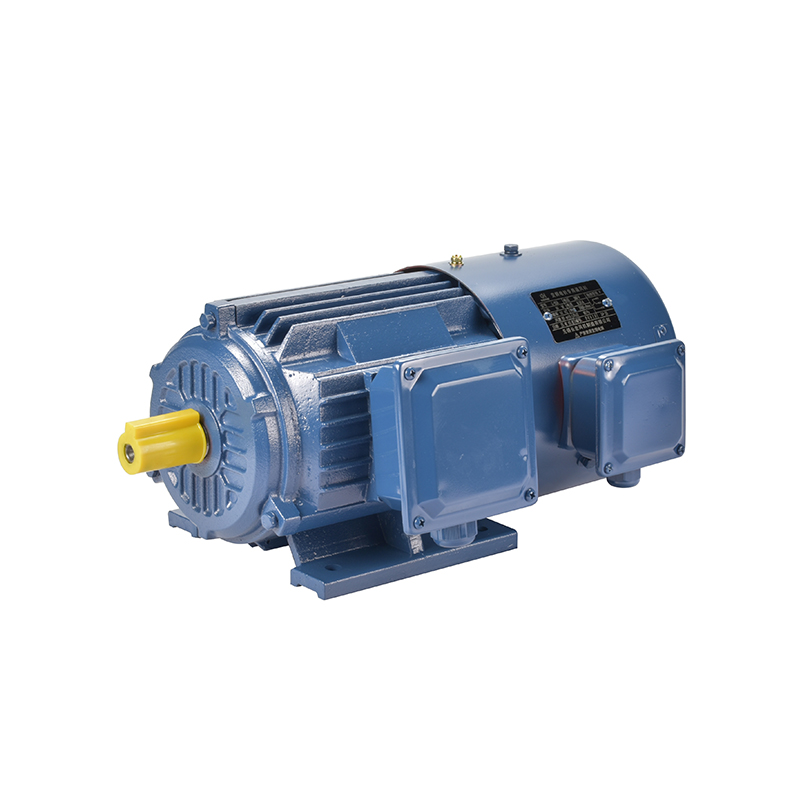
Frequent Braking Changes the Selection Process
A motor that operates continuously at a relatively stable speed may have very different requirements from one that starts and stops repeatedly. Every braking event involves mechanical energy that must be managed by the braking system, while repeated cycles can increase thermal and mechanical stress.
For this reason, engineers should establish the actual motion profile before selecting the motor. Important information includes:
- Number of starts and stops per operating period
- Driven load and reflected inertia
- Shaft speed and transmission ratio
- Required stopping time
- Braking torque
- Operating environment
This information gives manufacturers a clearer basis for recommending a suitable motor and brake combination.
Why Load Inertia Deserves More Attention
Stopping a rotating system is not simply a matter of applying a brake. The larger the rotating inertia, the more mechanical energy must be controlled during deceleration. Conveyor rollers, drums, fans, gearboxes, and other rotating components can all contribute to the total inertia seen by the motor.
In automated machinery, an underestimated inertia value can result in longer stopping times, excessive brake loading, or inconsistent positioning. Engineers should therefore calculate or estimate the complete driven inertia rather than selecting a motor solely from the machine's required output power.
Brake Duty and Heat Management
Frequent braking can generate heat at the brake friction surfaces. If the machine performs repeated stop-start cycles, thermal conditions should be considered together with brake torque and cycle frequency.
A suitable design may involve a motor with appropriate thermal capacity, a brake selected for the required duty, and sufficient cooling around the assembly. Some industrial brake motor ranges also provide options such as forced ventilation or thermal protection for demanding duty cycles.
For OEM equipment manufacturers, evaluating these factors during the design stage can help prevent avoidable maintenance problems after installation.
Coordinating the Brake With a VFD
Variable frequency drives are increasingly used to control motor speed, particularly in automated production and handling systems. When a brake motor is connected to a VFD, the braking sequence should be coordinated with the motor-control logic.
The control system needs to determine when the motor decelerates, when the brake releases, and when the brake engages. Poor timing can create unnecessary mechanical stress or affect positioning accuracy. Modern brake motor solutions are available with configurations designed for variable-speed operation, but compatibility should always be confirmed for the specific motor, brake, and control system.
Applications Where High-Cycle Performance Matters
High-cycle braking is particularly relevant to machines where stopping forms part of the production sequence. Packaging equipment may stop repeatedly for filling, sealing, or indexing. Conveyor systems may require controlled stopping at transfer points, while warehouse automation equipment can depend on repeatable positioning between different handling stages.
In these applications, the brake should be evaluated as part of the complete motion system rather than as an independent accessory. The required performance depends on the machine's load, speed, inertia, cycle rate, and control sequence.
How Procurement Teams Can Reduce Selection Errors
A detailed technical specification can make supplier evaluation considerably easier. Instead of requesting only motor power and voltage, buyers should provide the manufacturer with the complete application profile.
A useful RFQ can include:
- Motor output and rated speed
- Supply voltage and frequency
- Mounting arrangement and frame size
- Required brake torque
- Load and transmission information
- Start-stop frequency
- VFD or control-system requirements
- Ambient temperature and installation conditions
This information allows the manufacturer to evaluate whether the proposed configuration is suitable before production begins.
Selecting a Motor for the Complete Duty Cycle
The most appropriate motor is not necessarily the one with the highest brake torque or largest power rating. It is the configuration that matches the machine's actual motion profile while maintaining reliable braking, thermal performance, positioning, and serviceability.
For OEM manufacturers and industrial buyers, working with an experienced Brake Motor supplier can simplify this process. By evaluating motor output, braking requirements, inertia, cycle frequency, mounting dimensions, and control compatibility together, buyers can develop a more practical drive solution for conveyors, packaging machinery, automated handling systems, lifting equipment, and other applications where controlled and repeated stopping is part of everyday operation.

-
Feedback
Related products
PRODUCT
KEEP IN TOUCH
Copyright © Zhejiang Hute Motor Co., Ltd. All Rights Reserved.
Electric Motor in China
 浙ICP备2023016719号-1