


 English
 русский
 Español
 عربى
عربى
Author: Admin Date: 2026-09-04
How Can Brake Motors Improve Stopping Control in Modern Industrial Equipment?
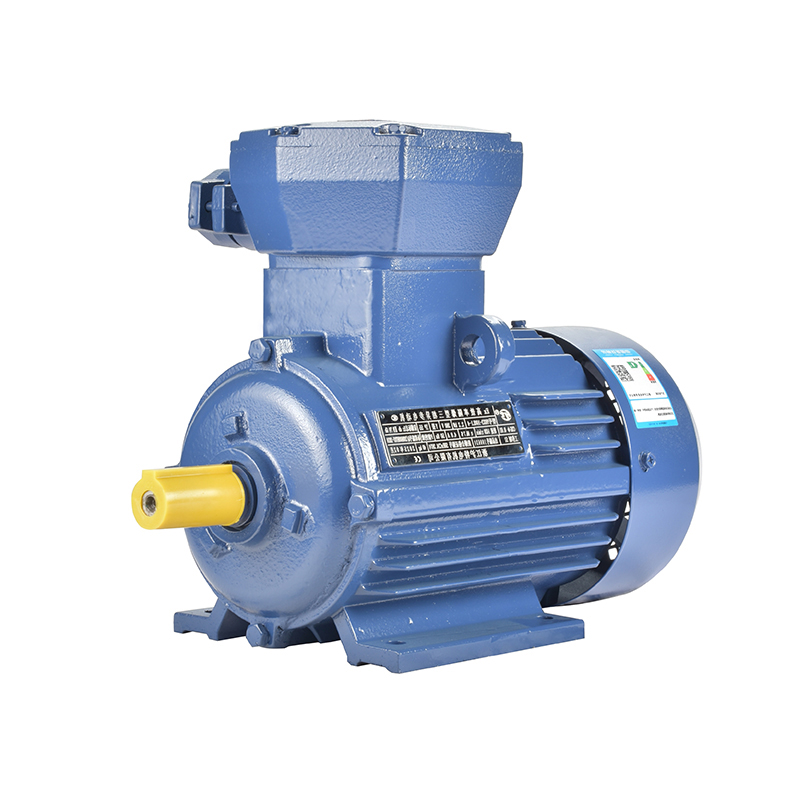
As industrial equipment becomes more automated, controlled stopping has become just as important as continuous motor operation. Conveyors, lifting equipment, packaging machines, automated production lines, and material-handling systems may need the motor to stop at a defined position and hold the load reliably. A properly selected Brake Motor combines motor drive and braking functions in one integrated unit, helping equipment designers manage stopping, positioning, and load holding without adding a separate braking assembly.
Why Stopping Performance Matters in Automation
In a conventional motor-driven system, simply cutting motor power does not necessarily stop the driven load immediately. Rotational inertia, load weight, transmission structure, and operating speed can all influence the stopping process. This becomes more noticeable in equipment that starts and stops frequently.
For automated machinery, the braking system should therefore be considered during the initial motor-selection stage. Engineers normally need to evaluate:
- Required braking torque
- Motor speed and power
- Load inertia
- Start-stop frequency
- Holding requirements after power removal
- Available voltage and control configuration
A motor that runs efficiently but does not provide suitable braking characteristics may not meet the complete requirements of the machine.
Understanding Electromagnetic Braking
Many industrial brake motors use an electromagnetic disc brake integrated into the motor assembly. In a common spring-applied configuration, electrical power releases the brake, while removing power allows the braking mechanism to engage. This operating principle can support controlled stopping and load holding in applications where movement must be limited after the motor is de-energized.
The actual braking behavior depends on the brake design, torque rating, motor characteristics, load, and control system. For this reason, buyers should evaluate the complete motor-brake combination rather than selecting the motor and brake independently.
Matching Brake Torque With the Driven Load
One of the most important engineering decisions is selecting appropriate braking torque. Too little torque may result in excessive stopping distance or insufficient holding capability, while an unnecessarily high braking torque can increase mechanical stress within the transmission system.
For procurement teams, the motor supplier should receive practical application information instead of only the requested motor power. Providing load characteristics, transmission ratio, operating speed, mounting arrangement, and expected duty cycle allows the manufacturer to assess whether the proposed brake configuration is suitable.
Supporting Precise Positioning
Brake motors are increasingly relevant in machinery where positioning accuracy influences productivity. Conveyor systems, lifting mechanisms, packaging equipment, and automated handling machinery may require the driven component to stop repeatedly at a defined location.
In these applications, the brake does more than stop rotation. It can help maintain the machine's position after the motor stops, reducing unwanted movement caused by gravity, load inertia, or external forces. This makes the combination of motor performance and braking response an important consideration when designing compact automated equipment.
Consider the Working Environment
The installation environment should also influence brake motor selection. Dust, moisture, vibration, temperature, and operating frequency can affect both the motor and braking assembly.
For industrial applications, buyers should review:
- Enclosure and protection requirements
- Ambient temperature
- Installation orientation
- Brake operating frequency
- Maintenance accessibility
- Motor insulation and cooling arrangement
For equipment used in demanding production environments, these factors can be just as important as rated power and speed when evaluating long-term operating suitability.
Integration Can Simplify Machine Design
An integrated brake motor can reduce the need for a separately mounted braking device, which may simplify mechanical design and installation. For OEM machinery manufacturers, this can be useful when available installation space is limited or when the motor and braking system need to work as one coordinated drive unit.
Customization may also be required for specific mounting dimensions, shaft configurations, voltage requirements, brake torque, or control arrangements. Working directly with a manufacturer allows these requirements to be reviewed before production rather than being addressed after installation.
Selecting a Manufacturer for OEM Projects
For overseas buyers, choosing a brake motor supplier should involve more than comparing catalog prices. Technical documentation, motor-brake matching, production consistency, customization capability, testing procedures, and after-sales engineering support all influence the final project result.
A capable Brake Motor manufacturer can help OEM customers evaluate motor power, speed, brake torque, mounting configuration, electrical requirements, and operating conditions together. This engineering-based approach helps manufacturers of conveyors, lifting equipment, packaging machinery, automation systems, and material-handling equipment develop a drive solution that supports controlled stopping and reliable machine operation.

-
Feedback
Related products
PRODUCT
KEEP IN TOUCH
Copyright © Zhejiang Hute Motor Co., Ltd. All Rights Reserved.
Electric Motor in China
 浙ICP备2023016719号-1