


 English
 русский
 Español
 عربى
عربى
Author: Admin Date: 2026-09-25
How Can Brake Motors Help Reduce Maintenance Risks in Automated Material Handling?
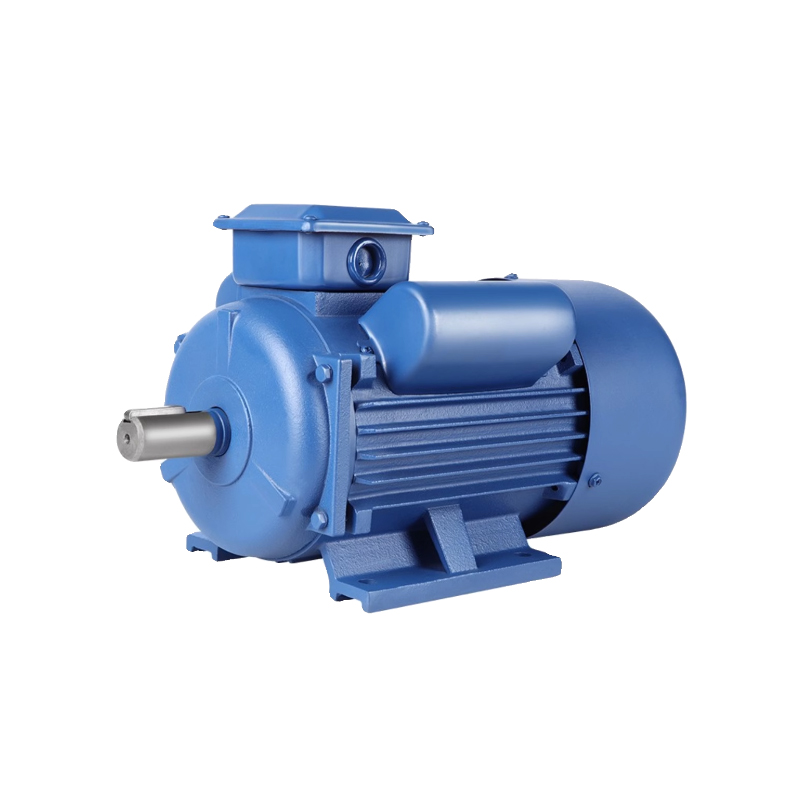
As warehouses, distribution centers, and production facilities place greater emphasis on continuous material flow, motor selection increasingly involves more than output power and efficiency. Conveyors, transfer systems, lifts, palletizing equipment, and automated handling machines often need controlled stopping as part of their normal operating sequence. When braking performance becomes inconsistent, the resulting issue may affect positioning, throughput, and maintenance schedules. Selecting and maintaining a suitable Brake Motor can therefore be an important part of designing a dependable material-handling system.
Identify the Real Source of Stopping Problems
When a conveyor or handling machine does not stop as expected, replacing the motor immediately may not solve the problem. Engineers should first determine whether the issue comes from the brake, load, transmission, control sequence, or operating environment.
A practical inspection can start with:
- Checking whether the brake releases completely during operation
- Reviewing stopping time and coast distance
- Inspecting the mechanical transmission for unusual resistance
- Comparing actual load conditions with the original design
- Checking whether the braking cycle has become more frequent
This approach helps distinguish normal brake wear from problems caused by incorrect application or changes in machine duty.
Brake Wear Is Closely Related to Machine Duty
A brake used occasionally for holding a stopped shaft has different requirements from one that engages repeatedly throughout a production cycle. Frequent braking introduces additional friction and heat, while high-inertia loads can place greater demands on the braking components.
For automated equipment, maintenance teams should therefore record the actual operating pattern rather than judging the brake only by calendar time. Start-stop frequency, load inertia, shaft speed, stopping requirements, and operating hours all influence brake duty. Industry guidance for brake motor selection similarly emphasizes the relationship between the driven mechanism, inertia, cycle rate, and brake function.
Keep the Operating Environment in the Selection Process
Material-handling equipment may operate in environments containing dust, moisture, vibration, temperature variation, or frequent cleaning. These conditions can influence motor insulation, bearings, brake components, and enclosure performance.
For example, a motor installed near a washdown area may require a different enclosure and protection arrangement from one operating inside a dry distribution center. Similarly, equipment exposed to continuous vibration should be evaluated for mounting stability and mechanical connections.
Matching the motor and brake configuration to the installation environment from the beginning can help avoid maintenance issues caused by unsuitable protection or operating conditions.
Check Brake Release and Engagement Behavior
A brake should not be evaluated only by whether it can stop the shaft. The transition between released and engaged states also matters.
If the brake does not release completely, friction can remain during motor operation and contribute to unnecessary heat generation. If engagement occurs while the rotating system is still moving rapidly, the transmission may experience additional mechanical loading.
This is particularly relevant to conveyors, indexing systems, and automated handling equipment where the motor may repeat the same movement sequence many times. Proper brake control and commissioning should confirm that the brake releases before normal acceleration and engages at the intended point in the stopping sequence.
Maintenance Starts With the Complete Drive System
A brake motor should not be treated as an isolated component. The motor, brake, gearbox, coupling, pulley, conveyor, and driven load form one mechanical system.
If a conveyor is modified to carry a heavier product or operates at a different speed, the original brake selection may no longer represent the actual duty. Likewise, changing the gearbox ratio can alter the speed and torque seen at the driven shaft.
For retrofit projects, engineers should therefore review the complete drive chain before replacing a brake motor. This can prevent a replacement component from being selected solely according to the old nameplate.
Make Procurement Specifications More Useful
For OEM buyers and maintenance teams, a detailed RFQ can reduce unnecessary back-and-forth with manufacturers. Instead of specifying only motor power, procurement documents should describe how the equipment actually moves and stops.
Useful information includes:
- Motor power, speed, voltage, and frequency
- Mounting and shaft dimensions
- Load characteristics and gearbox ratio
- Starts and stops per hour
- Required stopping or holding function
- Installation environment
- VFD or PLC control requirements
- Existing motor and brake specifications for replacement projects
Providing this information allows suppliers to evaluate the complete application rather than matching a product from a basic catalog table.
Design for Reliable Long-Term Operation
Maintenance-friendly motor selection begins before the machine reaches the production floor. A suitable braking solution should match the load, duty cycle, environmental conditions, mounting arrangement, and control system while allowing practical inspection and servicing.
For manufacturers of conveyors, warehouse automation equipment, packaging machinery, lifts, and material-handling systems, an experienced Brake Motor supplier can provide technical support during specification, customization, replacement, and commissioning. Treating the motor and brake as one coordinated drive solution helps OEM engineers build equipment around predictable stopping behavior rather than addressing braking problems after installation.

-
Feedback
Related products
PRODUCT
KEEP IN TOUCH
Copyright © Zhejiang Hute Motor Co., Ltd. All Rights Reserved.
Electric Motor in China
 浙ICP备2023016719号-1