


 English
 русский
 Español
 عربى
عربى
Author: Admin Date: 2026-06-19
Are Smart Factories Driving a New Wave of Motor Upgrades in Global Industry?
Global manufacturing is rapidly shifting toward automation, data-driven production, and energy optimization. In this transition, industrial buyers are rethinking core equipment choices, especially motors used in continuous production systems. As smart factory projects expand across Europe, North America, and Southeast Asia, demand is rising for motors that can support flexible operation, stable performance, and energy efficiency under digital control systems. One of the most frequently evaluated options is the Second Class Energy Efficient Motor, particularly in retrofit projects where full system replacement is not practical but efficiency improvement is still required.
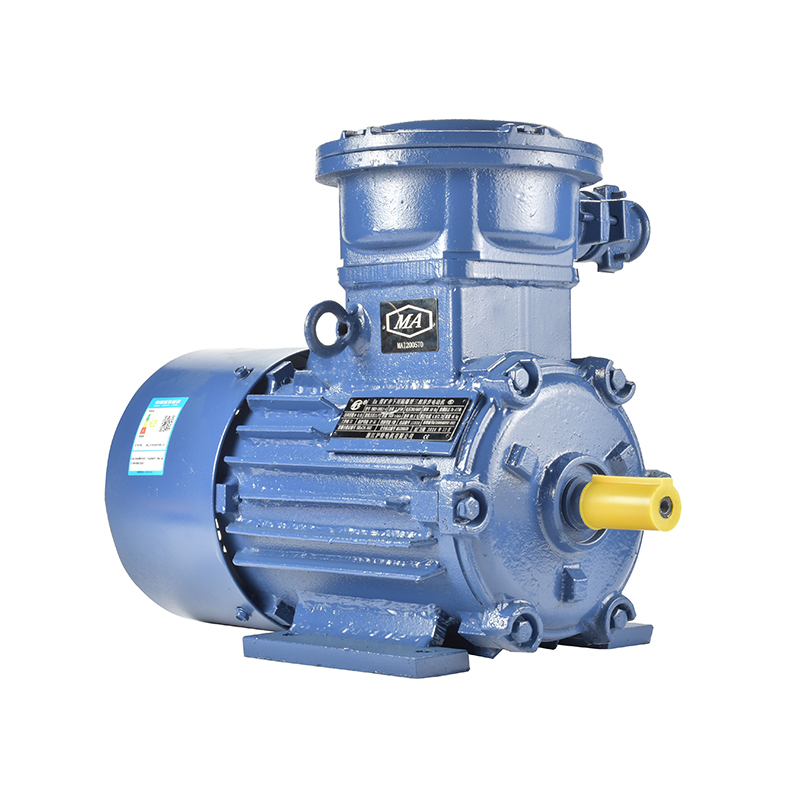
Smart Factory Expansion Is Changing Equipment Requirements
The rise of Industry 4.0 has changed how factories evaluate mechanical components. Motors are no longer viewed as standalone equipment, but as integrated parts of a connected system. Sensors, PLCs, and energy monitoring platforms now require motors with predictable performance curves and stable response under variable load conditions.
Procurement teams are increasingly asking whether motors can maintain efficiency consistency when production lines adjust speed frequently. This is especially important in packaging, textile, and material handling industries where production demand fluctuates throughout the day.
Retrofit Projects Are Driving Practical Motor Demand
Not all factories are building new systems. A large portion of global demand comes from retrofit and upgrade projects. In these cases, buyers prefer solutions that can fit existing installations without requiring major mechanical redesign.
Common concerns include:
- Compatibility with existing mounting dimensions
- Ability to operate under older control cabinets
- Reduced downtime during replacement
- Stable output under partial load operation
This is where energy-efficient motors designed for transitional upgrades become highly relevant. Many engineering teams prioritize operational continuity over full system redesign, making incremental efficiency improvements more realistic.
Thermal Stability Under Continuous Automation Loads
Smart factories often run longer production cycles with fewer shutdowns. This increases the importance of thermal stability in motor design. Engineers are now closely evaluating how motors perform under continuous load, especially in conveyor systems, automated storage systems, and fluid handling equipment.
Key technical concerns include:
- Heat dissipation efficiency during long operation hours
- Bearing wear rate under variable speed conditions
- Insulation durability under inverter-driven stress
Manufacturers are responding by improving cooling structure design and selecting higher-grade insulation materials to extend operational lifespan.
Integration with Frequency Control Systems
A major requirement in smart factories is precise speed regulation. Motors must work seamlessly with frequency inverters to adjust output based on real-time production needs. However, not all motors perform equally under inverter operation.
Engineering buyers are particularly concerned about:
- Low-speed torque stability
- Electromagnetic noise reduction
- Harmonic resistance under variable frequency load
This is why Frequency Conversion Motor solutions are gaining stronger attention in automation-heavy industries. They provide better adaptability in systems where production speed changes frequently and energy optimization is a priority.
Procurement Trends: From Price-Based to Performance-Based Selection
In the past, motor procurement decisions were heavily price-driven. Today, industrial buyers are shifting toward lifecycle-based evaluation. This includes energy consumption over time, maintenance intervals, failure rates, and compatibility with automation systems.
Procurement teams often involve both purchasing managers and technical engineers to ensure that selected motors align with long-term production strategies. This collaborative decision-making process is becoming standard in large manufacturing operations.
Manufacturer Role in Supporting Engineering Selection
From a manufacturing perspective, demand for technical support is increasing. Buyers expect more than product delivery—they require engineering guidance, performance data interpretation, and customization options.
Typical OEM/ODM requirements include:
- Voltage and frequency customization
- Shaft and mounting adaptation
- Protection class adjustment for harsh environments
- Performance optimization for specific load profiles
This trend reflects a broader shift toward application-specific motor design rather than standardized mass production.
Conclusion: Motors as Core Components of Smart Manufacturing
As smart factory adoption continues, industrial motors are becoming central to production efficiency and system intelligence. Buyers are prioritizing reliability, energy performance, and control compatibility over basic specifications alone.
For manufacturers and system integrators, understanding these evolving requirements is essential for staying competitive in global industrial markets.

-
Feedback
Related products
PRODUCT
KEEP IN TOUCH
Copyright © Zhejiang Hute Motor Co., Ltd. All Rights Reserved.
Electric Motor in China
 浙ICP备2023016719号-1