


 English
 русский
 Español
 عربى

Author: Admin Date: 2026-10-23
Why Does Thermal Protection Matter in Flameproof Three Phase Electric Motor Selection?
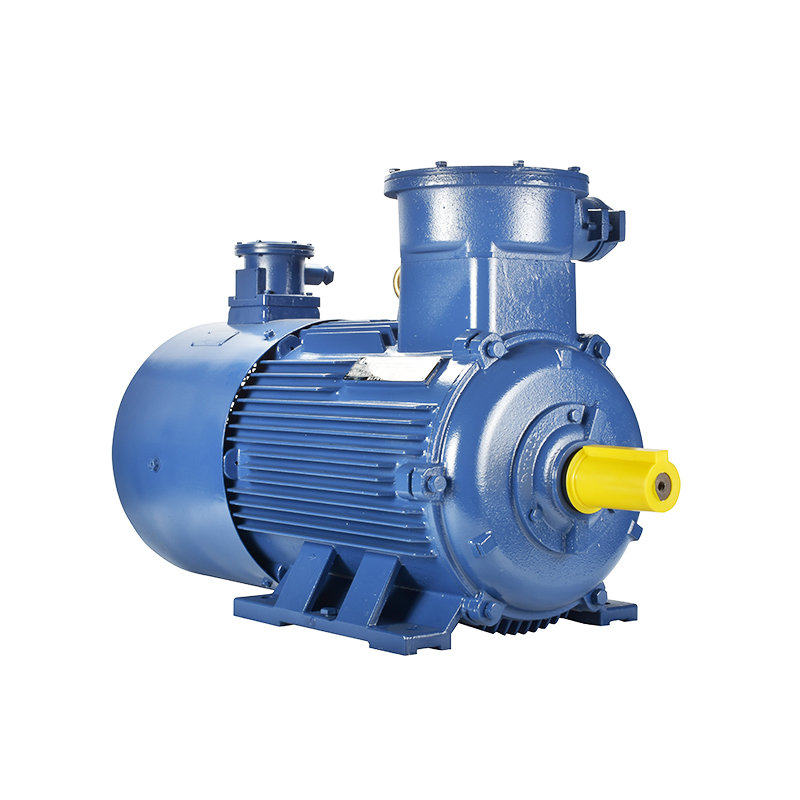
Selecting a Flameproof Three Phase Electric Motor for a hazardous industrial environment involves more than matching rated power and voltage. The motor must also handle its actual load, starting conditions, ambient temperature, and operating cycle without exceeding its permitted thermal limits. For engineers and procurement teams, understanding thermal protection can help reduce selection errors and support safer long-term operation.
Motor Load Directly Affects Temperature
An electric motor converts electrical energy into mechanical output, but part of the input energy is released as heat. When a motor operates under excessive load, starts too frequently, or runs under unsuitable conditions, winding temperature can rise beyond the expected operating range.
This is particularly important in hazardous areas because temperature control is connected with ignition-risk management. The selected motor should therefore be evaluated against the real driven equipment rather than its nameplate power alone.
Starting Conditions Should Be Considered
A motor may experience a significantly different electrical and thermal condition during startup than during continuous operation. Pumps, compressors, fans, conveyors, and other industrial machines can have different starting characteristics and load profiles.
Engineers should check starting frequency, acceleration requirements, mechanical load, and available power supply before confirming a Flameproof Three Phase Electric Motor. A motor that appears suitable for continuous running may not be appropriate if the application requires frequent starts or demanding acceleration.
Thermal Protection Supports Safer Operation
Thermal protection is designed to help prevent serious motor damage caused by excessive temperature. IEC 60034-11:2020 specifies requirements for thermal protectors and thermal detectors used with induction motors to protect against thermal overloads.
For hazardous-area applications, the protection arrangement also needs to correspond with the motor's certified design and installation requirements. IEC 60079-14:2024 covers the selection and installation of electrical equipment for explosive atmospheres, including requirements related to initial inspection and documentation.
Ambient Temperature Changes the Operating Margin
The surrounding environment can influence motor temperature just as much as the electrical load. A motor installed in a hot production area, poorly ventilated enclosure, or location with restricted heat dissipation may operate differently from the same motor in a cooler environment.
Procurement specifications should therefore include ambient temperature and installation conditions instead of relying only on standard operating assumptions. Where environmental conditions fall outside the conditions covered by the equipment documentation, additional consideration may be required.
Protection Should Match the Actual Application
A suitable motor selection starts with the complete operating profile. Engineers should review rated output, voltage, frequency, starting method, duty cycle, load variation, ambient conditions, and hazardous-area requirements together.
This approach is especially useful when replacing an existing motor. Simply selecting a motor with the same power rating may overlook differences in starting frequency, enclosure requirements, cooling conditions, or protection arrangements.
Certification and Documentation Matter
For hazardous-area equipment, certification should not be treated as a paperwork issue that comes after technical selection. The motor's protection concept, marking, installation conditions, and associated documentation need to correspond with the intended application.
IEC 60079-14:2024 specifically addresses electrical Ex equipment selection, installation, initial inspection, documentation, and personnel competency. This makes complete technical documentation an important part of supplier evaluation.
Think Beyond Rated Power
A Flameproof Three Phase Electric Motor should be selected according to how the equipment will actually operate. Load behavior, starting frequency, thermal conditions, protection, hazardous-area classification, and installation requirements all influence whether a motor is appropriate for the application.
For buyers comparing industrial motor suppliers, asking for complete technical information early in the procurement process can make specification review easier and reduce compatibility problems during installation and operation.

-
Feedback
Related products
PRODUCT
KEEP IN TOUCH
Copyright © Zhejiang Hute Motor Co., Ltd. All Rights Reserved.
Electric Motor in China
 浙ICP备2023016719号-1